
Beard Shaping Service Guide for a Sharper Look
A beard can look full and healthy yet still feel unfinished when the neckline sits too low, the cheek line lacks definition, or the length hides the jaw rather than complementing it. This beard shaping service guide explains what a professional shaping appointment involves, how to choose a look that feels like you, and why precision makes the difference between simply growing a beard and wearing one with confidence.
What a Beard Shaping Service Actually Does
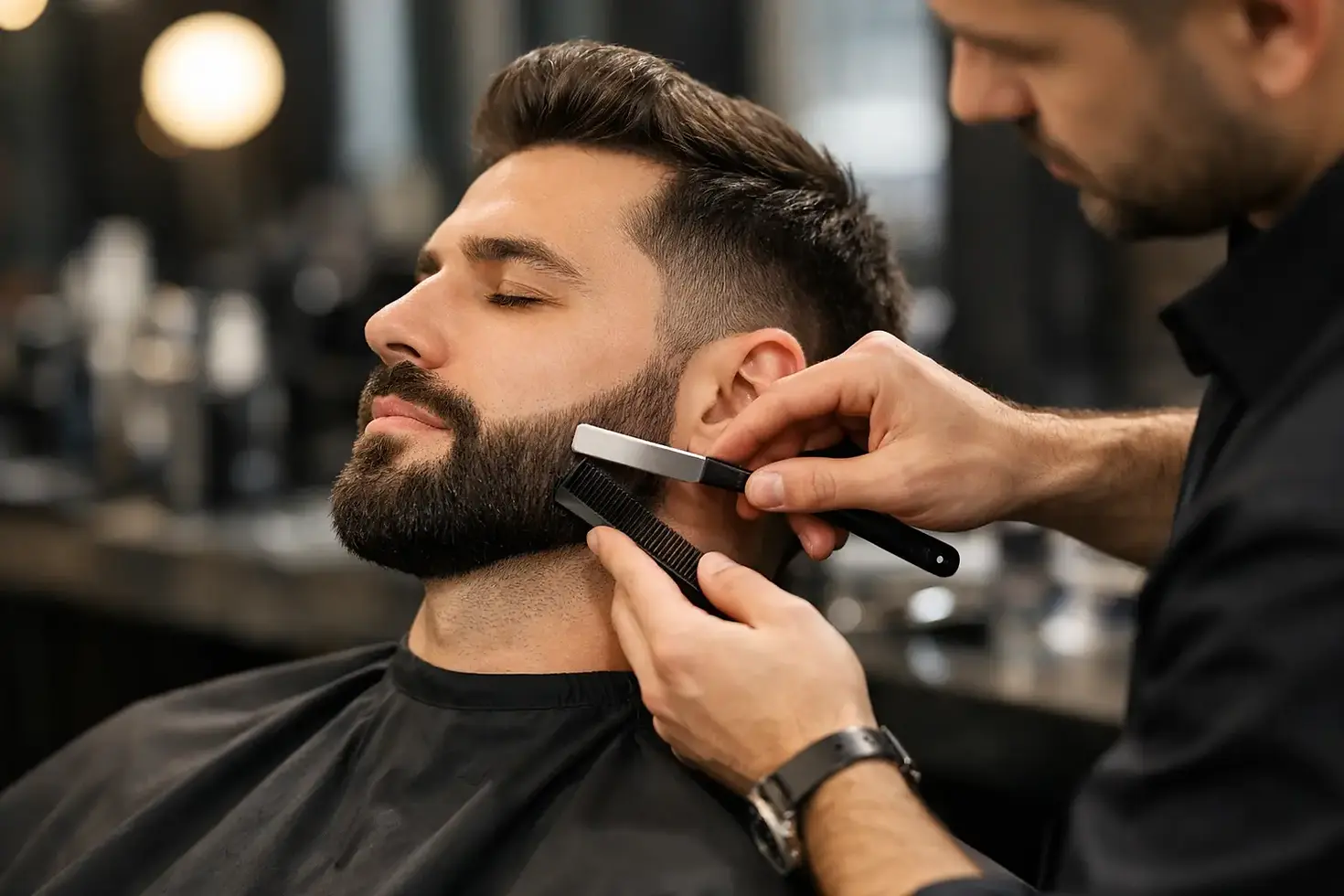
Beard shaping is more than taking a few inches off the bottom. It is a detailed grooming service that brings proportion, clean lines, and intentional structure to your facial hair. Your barber considers how your beard grows, where it is denser or finer, the direction of the hair, and the natural balance of your face before refining the outline.
A well-shaped beard should not look overly drawn on or feel disconnected from your haircut. The goal is a result that appears natural from every angle while still looking polished up close. That may mean creating a crisp cheek line, softening a squared jaw, tapering bulk through the sides, or preserving length at the chin for a more elongated profile.
The right approach depends on your features and your routine. Someone who prefers a short, clean beard may benefit from closely detailed edges and frequent maintenance. A client growing a longer beard may need weight removed gradually to maintain shape without sacrificing months of progress.
Beard Shaping Service Guide: The Details That Matter
The most noticeable elements of beard shaping are the cheek line, neckline, sideburn transition, mustache, and overall silhouette. Each one affects how complete the finished look feels.
The cheek line
A cheek line can be natural, softly defined, or more sculpted. The best option depends on the density and height of your facial hair. Forcing a very low or sharply angled line can make a naturally full beard look thinner than it is. In many cases, a professional will clean stray growth while preserving enough fullness to keep the beard looking balanced.
The neckline
The neckline is where many at-home trims go wrong. Taking it too high can make the beard appear small or disconnected; leaving it too low can create a heavy, untidy effect beneath the jaw. A thoughtful neckline follows your individual jaw and neck structure rather than relying on a single rule for everyone.
When this area is clean and properly placed, the beard looks intentional even as it grows out. It also makes a meaningful difference in professional settings, where a polished neckline can keep a fuller beard from looking unkempt.
The sideburn and haircut connection
Your beard and haircut should feel like one considered look. A gradual taper from the sideburn into the beard often creates a cleaner transition, especially with short or faded hairstyles. With longer hair or a fuller beard, a softer blend may look more natural.
This is one reason a shaping service is valuable alongside a haircut. The two services can be tailored together, so the proportions around the temples, ears, jaw, and chin work in harmony.
The mustache
A mustache deserves its own attention. It may be trimmed neatly away from the lip, shaped to blend into the beard, or kept fuller for a more classic statement. The right choice should fit your comfort, grooming habits, and the natural texture of your hair.
Choosing a Beard Shape for Your Face
There is no single beard style that works for every face. A flattering shape is less about following a trend and more about using facial hair to create balance.
If your face is rounder, leaving modest length through the chin and keeping the sides controlled can create a more defined profile. If your face is longer or narrower, too much length at the chin may exaggerate that shape, while a little more fullness at the sides can add balance. A stronger square jaw often pairs well with softened corners and a natural taper, preventing the overall look from becoming too boxy.
Growth patterns matter just as much as face shape. Patchier areas do not mean you need to settle for an uneven beard. A skilled professional can select a shorter length, adjust the outline, or direct attention toward your strongest areas of growth. In some cases, a closely shaped stubble beard is more flattering and easier to maintain than a longer style that exposes sparse sections.
Bring a reference photo if you have one, but treat it as a starting point rather than a blueprint. Your hair density, curl pattern, and facial structure may call for adjustments that make the final result better suited to you.
What to Expect at Your Appointment
A quality beard appointment begins with a conversation. Share how you typically wear your beard, how often you are willing to maintain it, and whether you want a sharp finish or a softer, more relaxed look. Mention any areas that grow unevenly, skin sensitivity, or past experiences with irritation after shaving.
From there, your barber will assess the current length and shape before trimming. Clippers may be used to establish length and remove bulk, while shears can refine longer hair and create a more natural finish. Detail work around the cheeks, neck, and mustache is then handled with close attention to symmetry. Depending on the service and your preference, a hot towel and close shave may be used to finish the edges.
The experience should feel attentive, not rushed. At Bliss & Blade, beard care is treated as a personal grooming ritual, with the details tailored to how you want to look when you step back into your day.
How Often Should You Book Beard Shaping?
Maintenance timing depends on the style you choose and how quickly your hair grows. Short, sharply defined beards often benefit from a shaping visit every two to three weeks. This keeps the neckline and cheek line clear before they lose their structure.
Medium and longer beards can often go three to five weeks between full shaping appointments, particularly if you are comfortable doing light cleanup at home. Still, waiting too long can make it harder to preserve the intended silhouette without taking off extra length.
If you are growing your beard out, regular professional visits can be especially helpful. It may seem counterintuitive to trim while growing, but small, strategic adjustments prevent split ends, remove uneven bulk, and make the transition period look more polished. The key is communicating that length is your priority, so the service focuses on refinement rather than a major reduction.
Keeping Your Beard Looking Fresh Between Visits
Your daily routine does not need to be complicated. Cleanse the beard regularly with a gentle product suited to facial hair and skin, then dry it thoroughly. Dampness trapped beneath a dense beard can lead to discomfort and make the hair look flat or unruly.
For short to medium beards, a small amount of beard oil can soften the hair and condition the skin beneath it. Longer or coarser beards may benefit from balm for added control. Use a brush or comb to guide hair into place, especially along the sides and under the chin, where growth can quickly lose direction.
Avoid repeatedly trimming the main outline at home unless you are confident in the placement. A few stray hairs are easy to remove, but changing a neckline or cheek line too aggressively can require weeks of growth to correct. Let your professional handle the structural work, then focus at home on cleanliness, moisture, and light styling.
When a Beard Shape Needs a Reset
Sometimes the best choice is not a minor cleanup. If one side has become much fuller, the neckline has drifted, or the beard has lost all connection to your haircut, a reset can restore balance. That does not always mean going dramatically shorter. Often, it means carefully removing weight in the right places and rebuilding the outline with a clear plan for future growth.
A reset is also useful before a wedding, professional photos, an important presentation, or any occasion when you want your grooming to feel especially considered. Book with enough time for your skin to settle if you are having close detail work or a shave, particularly if you are prone to redness.
The best beard shape is one that suits your face, your lifestyle, and the way you want to show up. With regular care and a little expert direction, your beard can become one of the most reliable parts of your personal style.



Comments